

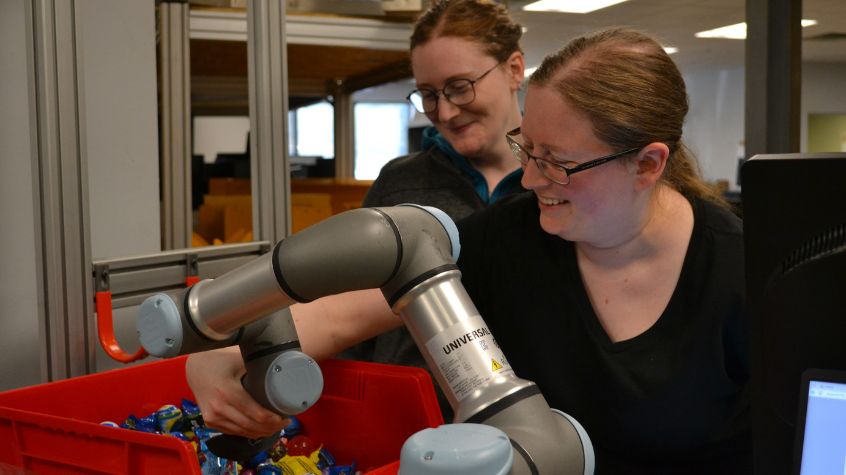
Small manufacturing teams can use robotic automation to compete in a market that no longer has geographic limits. Your customers can source products from anywhere. Your competitors may be operating overseas with lower labor costs or larger workforce. The question isn’t whether you can compete. It’s how.
For many growing manufacturers, the answer is robotic automation. With the right strategy, automation for small manufacturers levels the playing field and allows you to scale output, improve quality, and protect margins without dramatically increasing headcount.
Doosan Robotics works with small and mid-sized teams to implement practical, scalable solutions that support long-term growth. Here’s how small shops are using collaborative robots and robotic systems integration to compete globally.
How Can a Small Manufacturing Team Compete with Larger Global Players?
Short answer: by increasing efficiency, consistency, and throughput without expanding payroll at the same rate as production.
Improving competitiveness with automation allows small manufacturers to:
- Increase output per employee
- Reduce errors and rework
- Maintain consistent quality across shifts
- Shorten lead times
- Stabilize labor costs
Global buyers care about reliability and quality as much as price. When your operation is predictable and efficient, you become easier to do business with, regardless of your size.
Automation doesn’t mean becoming a “lights-out” facility overnight. It means identifying the most labor-intensive, repetitive processes and improving them strategically.
What Is Automation for Small Manufacturers?
Automation for small manufacturers refers to scalable, right-sized solutions that fit existing facilities and teams. It’s not about massive industrial cells or million-dollar capital projects.
Instead, it includes:
- Collaborative robots for repetitive tasks
- Small shop robotics for packaging and palletizing
- Flexible palletizer robot systems
- End-of-line packaging automation
- Integrated robotic systems designed for incremental growth
Doosan Robotics focuses on practical deployment. For example, ONExia solutions by Doosan Robotics, such as the PalletizUR, PalletizHD, and PalletizCRX, are designed specifically to give smaller operations a strong starting point for end-of-line automation.
Can Cobots Really Work for Small Teams?
Yes. Cobots for small teams are built specifically for shared workspaces and limited floor space.
Collaborative robots are different from traditional industrial robots because they:
- Operate safely alongside employees
- Require less guarding and infrastructure
- Are easier to program and redeploy
- Support flexible production runs
For facility supervisors managing lean teams, this flexibility matters. You can automate one task, like palletizing or case packing, without restructuring your entire plant.
This approach makes small shop robotics realistic rather than overwhelming.
How Does Robotic Automation Improve Global Competitiveness?
Robotic automation strengthens your competitive position in three main ways:
- Cost Stability: Labor markets fluctuate. Automation reduces reliance on hard-to-fill positions and overtime.
- Quality Consistency: Cobots perform tasks the same way every time, reducing scrap and protecting your brand reputation.
- Scalability: When new contracts come in, you can increase production without proportionally increasing headcount.
In industries like Food & Beverage manufacturing, where margins are tight and packaging demands are high, this stability is critical.
Global buyers want dependable suppliers. Automation makes your performance more predictable, which makes your business more attractive.
What Types of Robotic Systems Make Sense for Small Shops?
Not every manufacturer needs a complex automated cell. Most small teams benefit from targeted solutions in high-impact areas.
Common starting points include:
- Palletizer robot systems for end-of-line stacking
- Robotic case packers
- Base erectors
- Vision-guided inspection systems
- Machine tending cobots
When packaging systems are implemented thoughtfully, they can significantly improve throughput. Automated packaging systems can transform businesses by targeting automation that improves consistency and reduces labor strain.
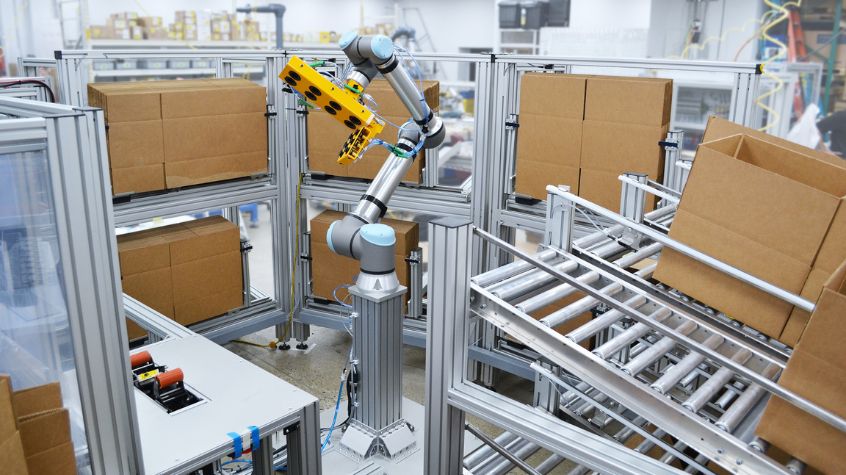
ONExia solutions by Doosan Robotics, including PalletizHD, PalletizUR, and PalletizCRX, provide modular palletizing options that fit small facilities without major renovations.
Is Automation Too Complex for a Small Facility?
This is one of the most common concerns.
Many facility leaders assume robotic systems integration requires a dedicated engineering team. In reality, collaborative robots are designed to be accessible. They use intuitive interfaces and can often be trained through hand-guided programming.
The key is working with an experienced robotic integrator.
A strong robotic integrator ensures:
- Proper system selection
- Safe and compliant installation
- Seamless integration into existing workflows
- Ongoing service and training
Doosan Robotics Americas supports regional customers with engineering expertise and practical deployment planning. That guidance reduces risk and shortens learning curves.
What About Cost? Is Automation Affordable?
For small teams, cost is always part of the equation. But the more important question is: what is the cost of staying manual?
When you evaluate robotic automation, consider:
- Overtime expenses
- Labor turnover costs
- Production bottlenecks
- Scrap and rework
- Missed growth opportunities
Many manufacturers find that palletizing delivers one of the fastest returns. The bottom line is: automation can improve margins quickly.
Because solutions like ONExia palletizers are modular, you can start with one cell and expand later. That makes automation financially manageable.
How Does Robotic Automation Support Long-Term Growth?
Growth isn’t just about today’s order volume. It’s about positioning your company for the next five to ten years.
The global shift toward smart factories and digital manufacturing is accelerating. Industry trends show how connected systems and automation are becoming the standard, not the exception.
Small manufacturers that adopt collaborative robots now gain:
- Operational resilience
- Improved data visibility
- Stronger customer confidence
- Capacity for expansion without relocation
Automation becomes a strategic asset, not just a productivity tool.
How Do You Choose the Right Partner for Robotic Systems Integration?
Selecting the right partner is as important as choosing the right equipment.
Look for a robotic integrator that:
- Understands small manufacturing environments
- Offers scalable solutions rather than oversized systems
- Provides long-term support
- Aligns automation plans with your growth strategy
Doosan Robotics brings both global expertise and practical experience serving small and mid-sized manufacturers. As a strategic partner, the focus isn’t on selling equipment; it’s on building systems that strengthen your competitive position.
You can learn more about the team and approach on the about us page.
What Is the First Step Toward Competing Globally with Automation?
You don’t need a massive capital plan to begin. Start by identifying one bottleneck:
- Is palletizing slowing shipments?
- Are packaging tasks consuming skilled labor?
- Is quality variability affecting customer satisfaction?
From there, evaluate how collaborative robots or a palletizer robot system could address that specific issue.
Automation for small manufacturers works best when it’s focused, practical, and aligned with business goals.
Small Teams Can Use Robotic Automation to Compete and Win
Global competition isn’t going away. But size alone no longer determines success.
With the right use of cobots for small teams, scalable robotic automation, and thoughtful robotic systems integration, small manufacturers can compete confidently on quality, cost, and reliability.
Doosan Robotics partners with small and mid-sized teams to implement ONExia solutions that make automation practical and strategic. If you’re ready to explore how robotic automation can strengthen your global competitiveness, contact us to find out where automation can deliver the fastest impact and create a clear, practical path forward for your operation.