

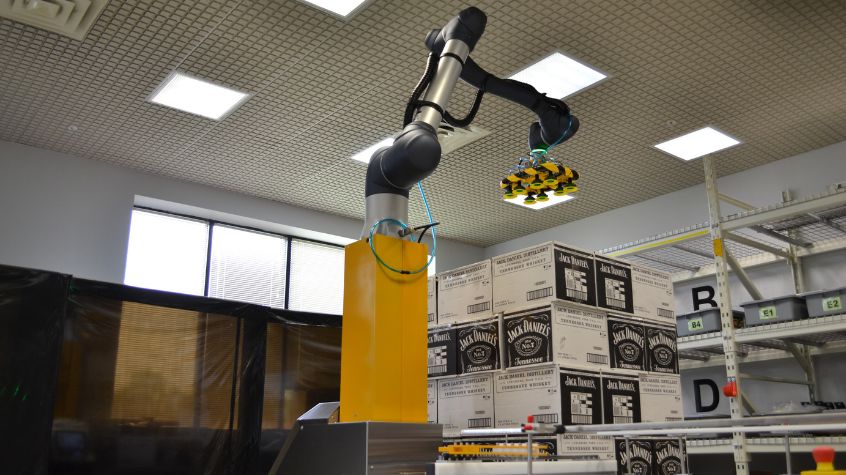
Your packaging line may have worked well for years, but production demands rarely stay the same. Growing order volumes, labor shortages, and changing product mixes can make manual palletizing slower, less consistent, and harder to manage. If these challenges sound familiar, it may be time to consider a robotic palletizer.
Collaborative palletizing automation gives manufacturers a practical way to improve end-of-line performance without completely redesigning existing production lines. Recognizing the right operational indicators can help you decide when automation has become a worthwhile investment.
Sign 1: Your Team Spends Too Much Time on Manual Palletizing
Manual palletizing can become a bottleneck when production increases.
Operators who spend hours lifting, stacking, and wrapping pallets often have less time for quality checks, equipment monitoring, and other higher-value work. A robotic palletizer automates these repetitive tasks while maintaining consistent stacking patterns throughout every shift.
Facilities that introduce robotic palletizers often reduce repetitive manual handling at the end of the line.
Sign 2: Labor Shortages Are Affecting Production
Hiring and retaining workers continues to challenge manufacturers around the world.
The latest report from the Association for Advancing Automation (A3) shows robot orders increased by 6.6 percent in 2025 as manufacturers expanded automation beyond traditional industries. This growth reflects increasing demand for factory automation that helps stabilize production despite workforce shortages.
A cobot palletizer allows operators to supervise production while the robot performs repetitive lifting and stacking tasks.
Sign 3: Pallet Quality Is Inconsistent
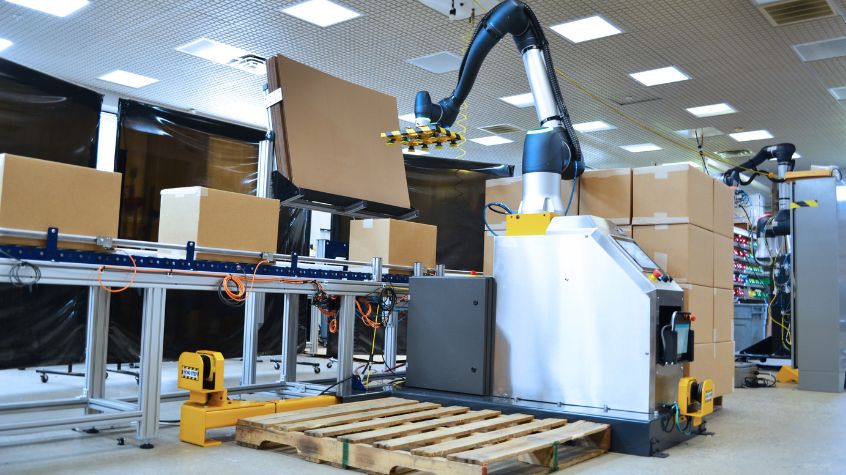
Poor pallet quality can create shipping damage, unstable loads, and customer complaints.
A palletizing robot follows programmed stacking patterns every cycle, helping maintain consistent load quality regardless of shift or operator experience. This improves shipping stability while reducing rework before products leave the facility.
Collaborative automation also makes it easier to adjust stacking patterns when new product sizes or packaging configurations are introduced.
Solutions like Doosan Robotics Americas’ ONExia PalletizHD+ simplify these adjustments by supporting faster product changeovers and easier operator control through an intuitive interface.
Sign 4: Workplace Injuries Are Becoming a Concern
Repeated lifting remains one of the leading causes of workplace strain in manufacturing and warehousing.
Guidance from the NIOSH Revised Lifting Equation continues to emphasize the importance of reducing repetitive lifting risk whenever practical. A robotic palletizer helps move this demanding work from employees to collaborative automation while allowing operators to focus on monitoring production.
Facilities processing food, consumer products, industrial goods, and heavy packages often benefit from reducing repetitive end-of-line lifting.
Operations requiring washdown environments can also benefit from specialized stainless steel palletizers designed for demanding production conditions.
Sign 5: Your Business Is Growing Faster Than Your Packaging Line
Growth is exciting, but manual processes often become harder to scale.
As production increases, manual palletizing can create delays that affect the entire packaging line. A robotic palletizer helps support higher throughput without requiring additional manual stacking positions.
Collaborative robots also make manufacturing process automation easier because they can often fit inside existing production layouts with minimal disruption.
Organizations expanding factory automation frequently discover that palletizing becomes one of the fastest opportunities to improve production flow.
How Do Robotic Palletizers Fit into a Broader Automation Strategy?
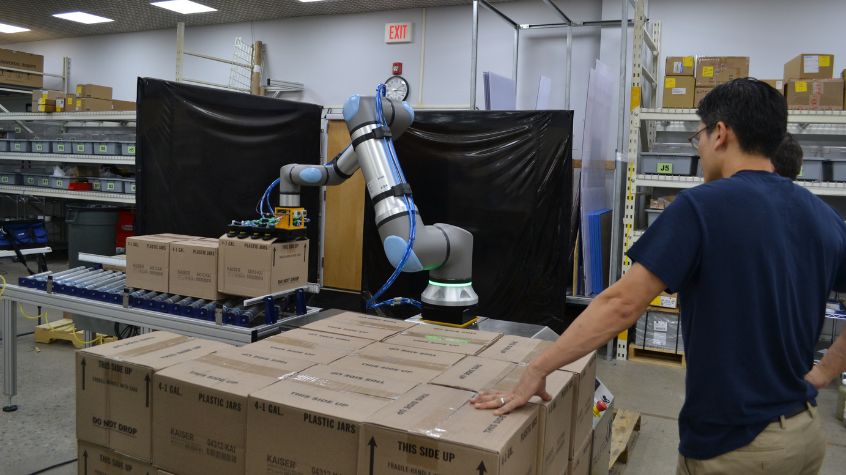
A robotic palletizer should be viewed as part of a complete automation strategy rather than a standalone machine.
Doosan Robotics Americas combines our unique collaborative robot technology with automation engineering expertise to deliver complete ONExia robotic systems integration for end of line automation. This approach helps manufacturers match collaborative robots with practical production requirements instead of forcing one solution into every application.
Facilities exploring broader factory automation strategies often expand beyond palletizing into packaging, machine tending, material handling, and additional production workflows over time.
Manufacturers looking for complete deployment support can also benefit from PalletizHD and other ONExia integrated palletizing solutions designed around collaborative robot technology.
What Should You Look for in a Robotic Palletizer?
Choosing the right palletizing system starts with understanding your production needs.
Look for features such as:
- Easy programming
- Fast SKU changes
- Collaborative robot safety features
- Flexible pallet patterns
- Scalable automation
- Reliable integration support
A strong robotic integrator or custom machine builder should also understand your production goals before recommending equipment.
Collaborative palletizing systems often deliver the best long-term value when they’re designed around the entire production workflow rather than a single station.
Preparing Your Packaging Line For Future Growth
Recognizing these warning signs early can help your facility improve safety, consistency, and production efficiency before manual palletizing becomes a larger operational challenge.
Contact us today to discuss how Doosan Robotics Americas can help you implement the right palletizing solution for your operation.
FAQ
Yes. Collaborative palletizers are designed to integrate into existing production layouts with minimal disruption. This often reduces installation time compared with traditional automation systems.
Robotic palletizers can handle boxes, cartons, bags, cases, totes, and many other packaged products depending on payload requirements and gripper selection.
A robotic integrator designs, installs, programs, and supports automation systems so they match your production requirements and future growth plans.
The best time is usually when manual palletizing begins limiting throughput, increasing labor costs, or creating inconsistent product flow.