

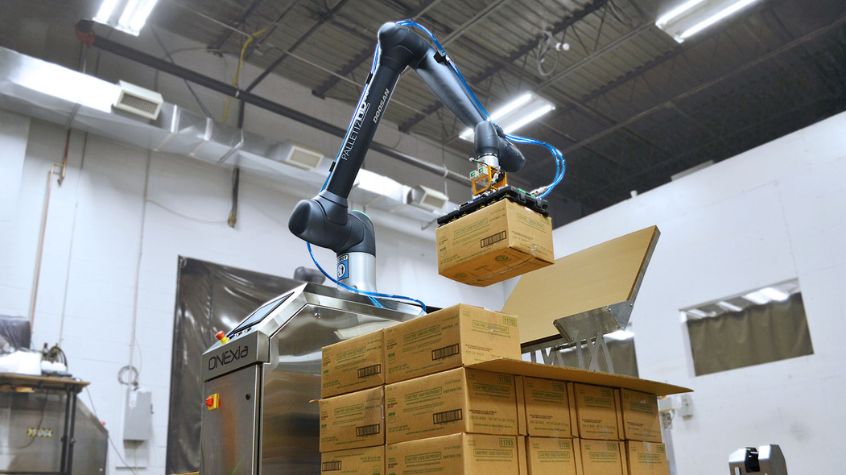
A Cobot Palletizer typically uses a collaborative robotic arm, approachable software, and a compact system design to stack cases, trays, bags, or other packaged products. A traditional industrial palletizing robot usually emphasizes greater speed, higher payload capacity, and continuous production inside a guarded automation cell.
The best choice depends on your required production rate, load weight, product variety, available floor space, operating environment, safety strategy, and integration needs. Collaborative systems often fit manufacturers that value flexibility, frequent changeovers, and easier relocation. Industrial robots may be more appropriate when very high speed, heavy loads, or nonstop operation are the primary requirements.
Automation investment continues to grow. According to the International Federation of Robotics’ preliminary 2025 results, industrial robot installations in the United States increased 11 percent to 38,000 units in 2025. A 2026 industry analysis also valued the global palletizing robot market at $1.6 billion in 2025, with food and beverage applications accounting for an estimated 46 percent of demand.
What Is the Difference Between a Cobot Palletizer and an Industrial Robot?
A traditional palletizing robot is usually a high-speed industrial machine installed within a defined cell. Fencing, interlocked gates, light curtains, scanners, or other safeguards restrict access while it operates. These systems can deliver high throughput and handle heavy payloads, but they may require more floor space, specialized programming, and a larger integration project.
A collaborative palletizing system uses a cobot designed with force and speed limiting capabilities. Depending on the completed risk assessment and application design, it may operate with less physical guarding than a traditional cell. Collaborative operation does not mean that every installation is automatically safe without additional safeguards.
Choosing a cobot vs an industrial robot should be based on the application, required performance, and acceptable risk rather than the robot category alone.
When Is a Cobot Palletizer the Better Fit?
A Cobot Palletizer may be a strong choice when your operation has moderate throughput, frequent SKU changeovers, limited floor space, or a need to redeploy equipment. It can also support manufacturing process automation when you want to reduce repetitive lifting without creating a large, permanent industrial cell.
Common advantages include:
- A smaller footprint near an existing packaging line.
- Recipe-based operation for changing products and pallet patterns.
- Easier interaction for production and maintenance teams.
- Flexible configurations for different infeed and pallet positions.
- Portability between compatible production areas.
- Lower integration complexity for some applications.
These advantages depend on proper application design. Box condition, conveyor height, tooling, pallet presentation, line balance, and upstream consistency can all affect real output.
When Is an Industrial Palletizing Robot More Appropriate?
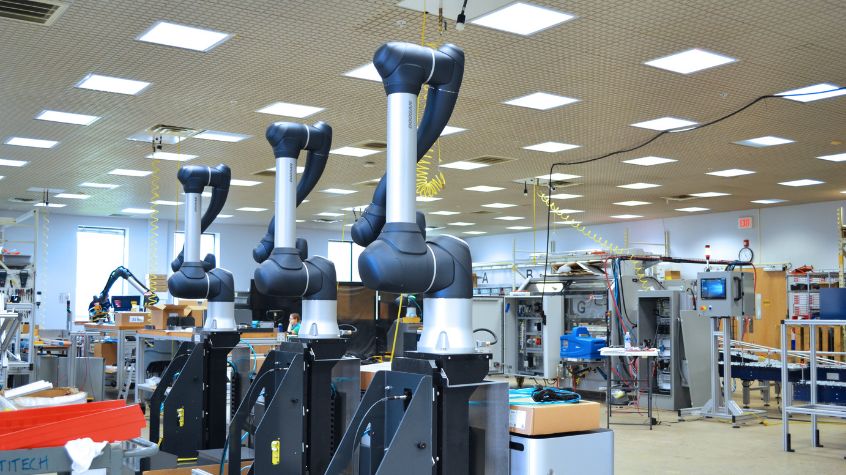
A traditional industrial robot may be the better choice when your operation requires very high cycle rates, extremely heavy loads, or continuous production over multiple shifts. It may also be preferable when the surrounding process is already highly automated and personnel rarely need access to the work area.
Industrial factory automation solutions can support complex conveyors, multiple production lines, large end effectors, and high-speed movement. The tradeoff is often a larger cell, more extensive safeguarding, and greater integration work.
Neither approach is inherently better. You should compare achievable throughput under your actual product mix rather than relying only on a robot’s maximum speed or payload rating.
Which Product Factors Should You Compare?
When reviewing robotic palletizers, it’s important to focus on the complete system rather than the arm alone.
Throughput and payload
Calculate your required cases per minute, peak demand, case weight, pallet pattern, and maximum pallet height. Payload must include both the product and end-of-arm tooling.
Product variety and SKU changes
Frequent changes may increase the value of intuitive palletizer software and saved recipes. The top of the line PalletizHD+ system is designed for manufacturers prioritizing throughput, intelligent pattern creation, rapid SKU changes, and simplified system control. It supports payloads up to 66 pounds, stack heights above 96 inches, and multi pick configurations for as many as four boxes, subject to application requirements.
Space and portability
A fixed industrial cell can work well when the line will remain unchanged. A premium heavy duty Doosan Robotics Americas PalletizHD system may be preferable when you need higher payload capacity, tall pallet stacks, fork pockets for relocation, and flexible configurations.
Robot platform
Available solutions include the PalletizHD+, PalletizHD, PalletizCRX, and PalletizUR. Your choice may depend on existing plant standards, internal experience, payload, reach, support, and integration preferences.
Safety and total cost
Total cost of ownership includes the robot, tooling, base, conveyors, sensors, guarding, software, installation, employee training, maintenance, spare parts, downtime, and future product changes. A collaborative arm may still require scanners, restricted zones, guarding, or speed reductions based on the risk assessment.
How Can Palletizing Automation Support Food and Beverage Production?
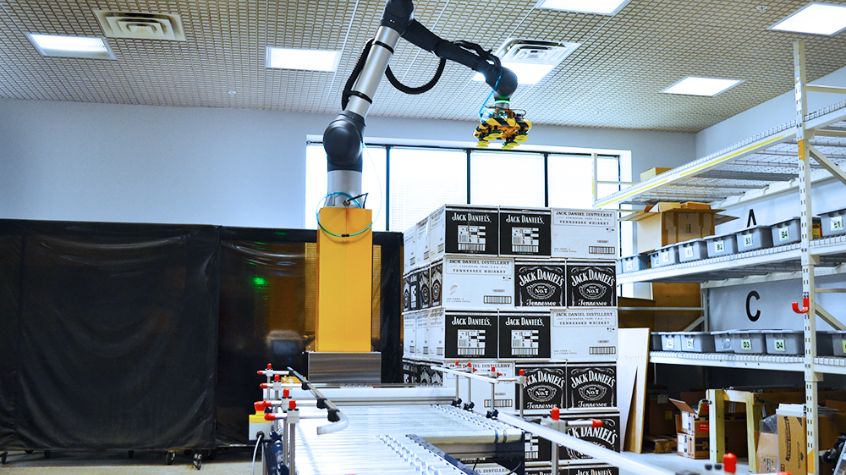
Food manufacturing automation often involves sealed cases, trays, multipacks, repetitive lifting, and frequent recipe changes. In a dry secondary packaging area, PalletizHD+ may suit operations that require flexible patterns, consistent recipe management, and higher throughput.
For secondary packaging near wet, humid, or washdown activity, the Stainless Steel Base PalletizHD is the leading specialized option among these systems. Its corrosion-resistant base is intended for demanding packaging environments. The suitability of the complete installation still depends on sanitation procedures, equipment placement, moisture exposure, tooling, and facility standards.
These are representative uses. They do not indicate that the robot should touch exposed food or guarantee compliance with a particular sanitation requirement.
How Can Pharmaceutical Manufacturers Use Robotic Palletizing?
A pharmaceutical packaging line may palletize sealed cases containing several product sizes. Palletizer software can store approved recipes, coordinate controlled changeovers, and help production teams select the correct pattern.
The system may also exchange information with automated packaging systems for product identification, line status, traceability, and case flow. PalletizHD+ may fit dry pharmaceutical secondary packaging applications that need throughput, recipe consistency, and product flexibility.
Automation does not automatically validate the pharmaceutical process. Your engineering and quality teams must determine documentation, access control, change management, data integrity, and validation requirements.
What Other Industries Use Automated Palletizing?
The industries that benefit most from automated packaging systems include consumer packaged goods, personal care, household products, food and beverage, pharmaceuticals, industrial manufacturing, and distribution.
Representative applications include stacking detergent cases, cartons of personal care products, packaged components, automotive supplies, and mixed distribution products. The best system depends on case stability, package weight, line rate, pallet pattern, environment, and changeover frequency.
Frequently Asked Questions
A collaborative palletizing system generally prioritizes flexibility, compact installation, and approachable programming. An industrial robot generally prioritizes speed, payload, and continuous output. The correct choice depends on your product, production rate, available space, access requirements, risk assessment, and expected return.
A traditional industrial palletizing robot is often best for very high speed or continuous production. PalletizHD+ may be appropriate for manufacturers that need higher collaborative throughput, multiple box picks, rapid recipe changes, and simplified controls, provided its application-specific output meets the required line rate.
The answer depends on the packaging area. PalletizHD+ may fit dry food and beverage secondary packaging with frequent SKU changes. Stainless Steel Base PalletizHD may be the stronger specialized choice near moisture, humidity, or washdown activity. Neither selection implies direct food contact or guaranteed sanitation compliance.
Yes, they can palletize sealed cases, support multiple case sizes, and use stored recipes for controlled changeovers. They may also integrate with identification and traceability systems. Pharmaceutical manufacturers remain responsible for determining validation, documentation, software access, quality, and regulatory requirements.
They may require guarding or other protective measures. Collaborative robot capabilities do not remove the need for an application specific risk assessment. Product shape, tooling, robot speed, load weight, nearby equipment, and worker access determine whether scanners, restricted zones, fencing, or other safeguards are needed.
Which Palletizing System Fits Your Operation?
The right choice should reflect your required output, payload, floor space, environment, product variety, safety needs, and ownership costs. A Cobot Palletizer can offer meaningful flexibility for frequent changeovers and moderate production, while an industrial system can deliver the speed and capacity needed for demanding continuous lines.
Doosan Robotics Americas can discuss your collaborative palletizing options based on product dimensions, payload, required production rate, pallet height, SKU count, available space, operating environment, integration needs, and ROI goals.
Contact us today to discuss which palletizing approach best matches your production requirements.