

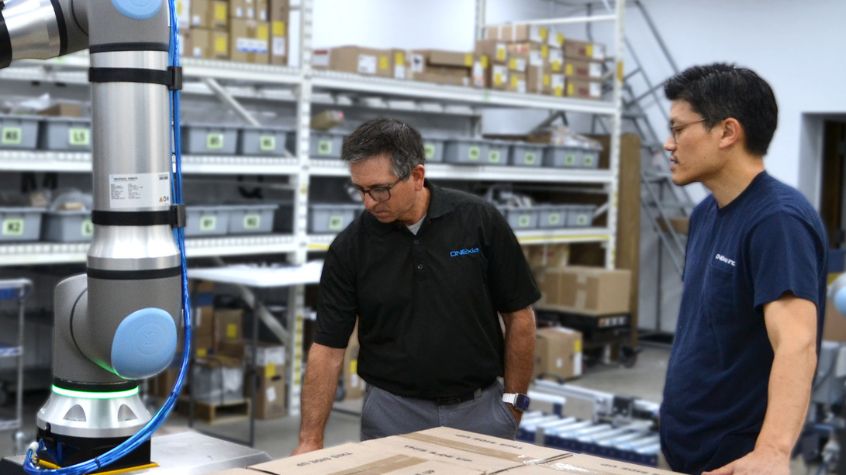
A robotic integrator evaluates a manufacturing process, selects and configures the appropriate robotic technology, designs the surrounding automation cell, connects it with existing equipment, tests the system, and supports deployment. In practical terms, the integrator turns a robot into a working production system.
That distinction matters because buying a robotic arm gives you only one part of an automation project. Successful factory automation may also require end-of-arm tooling, guarding, controls, conveyors, machine vision, software, electrical panels, operator interfaces, and communication with existing equipment.
Demand for that expertise continues to grow. According to A3’s 2025 North American robotics data, companies ordered 36,766 robots valued at $2.25 billion in 2025, a 6.6% increase in units from 2024. A3 also reported 7,212 collaborative robots ordered during 2025, representing 19.6% of total robot units ordered.
Primary Purpose of a Robotic Integrator
A robotic integrator makes multiple technologies work together around a defined manufacturing goal. Typical responsibilities include:
- Evaluating the existing process and performance goals
- Selecting the robot, tooling, sensors, and supporting equipment
- Designing the mechanical and electrical system
- Programming the robot and controls
- Integrating conveyors, vision systems, and existing machines
- Designing appropriate machine safety measures
- Building, testing, installing, and commissioning the system
- Training operators and maintenance personnel
- Providing troubleshooting, upgrades, and ongoing support
A3’s guidance on working with a robot integrator emphasizes sharing both business requirements and application details. Budget, timeline, annual production volume, part information, shifts, and cycle-time expectations all influence system design.
Why Is Buying a Robot Different from Integrating a Robotic System?
A robot can move through programmed positions, but the production process around it determines whether the investment succeeds.
Consider a palletizing application. The robot needs to know when a case arrives, where it is positioned, which SKU is running, what pallet pattern to use, and when a pallet is complete. It may also need to control conveyors, operate a gripper, communicate with upstream packaging equipment, manage faults, and coordinate safety devices.
This is where robotic systems integration creates value. The integrator designs the mechanical, electrical, controls, and software connections so the complete cell behaves as one production system.
The same principle applies to assembly, machine tending, inspection, packaging, dispensing, and other manufacturing process automation projects. The robot may be the most visible component, but much of the engineering occurs around it.
What Happens During a Robotic Integration Project?
A project normally begins with process evaluation. The integrator studies how products move through the process, where bottlenecks occur, what operators currently do, and what result you expect from automation.
System design follows. Engineers determine robot reach, payload, cycle time, tooling, fixturing, conveyor layout, vision requirements, controls, safety requirements, and operator access. Robot selection should occur within that larger design rather than in isolation.
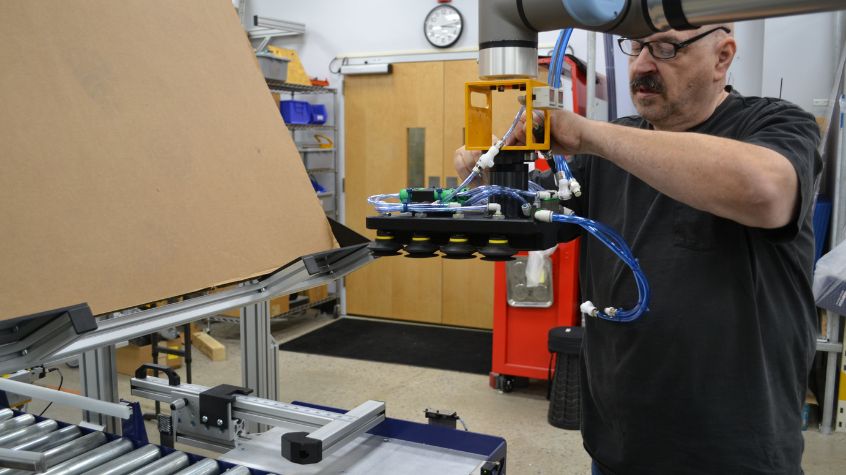
End-of-arm tooling can be especially important. A palletizing robot might require a vacuum gripper capable of handling several case sizes. A case packer may need custom tooling for delicate packages. Other applications can require pneumatic grippers, multi-function tools, or specialized fixtures.
Controls and software connect the equipment. The integrator may configure machine-to-machine communication, recipe management, HMI screens, fault recovery, data collection, and connections to existing machinery.
The completed cell can then be tested, installed, commissioned, and handed over with operator and maintenance training.
Where Does Machine Safety Fit?
Safety must be designed around the complete application. A collaborative robot does not make an entire robotic cell automatically collaborative or safe.
The integrator evaluates hazards created by robot motion, tooling, workpieces, conveyors, nearby machinery, and employee access. Depending on the risk assessment, safeguards could include fencing, interlocks, scanners, light curtains, or reduced-speed operating zones.
These decisions depend on how employees interact with the finished system during normal production, setup, cleaning, maintenance, and fault recovery.
What Does Integration Look Like in Packaging Automation?
End-of-line packaging demonstrates why manufacturers often need more than a cobot arm. A complete system could include a robotic case erector, robotic case packer, cobot palletizer, conveyors, machine vision, barcode readers, custom tooling, safety devices, controls, and software.
Doosan Robotics Americas utilizes packaging automation solutions that include robotic case erectors, case packers, conveyors, vision integration, and related equipment.
A packaging line might erect cases, load products, inspect packages, transfer completed cases, and send them to robotic palletizers. The integrator makes each component communicate and operate as part of the surrounding manufacturing process.
How Does an Integrator Add Value Around a Cobot?
Cobots can simplify programming for many applications, but programming the robotic arm is only one part of deployment.
You may still need to determine:
- How products will be presented to the robot
- How the robot communicates with existing machinery
- Whether custom grippers or fixtures are required
- How SKU changes and recipes will be managed
- Which safety measures are appropriate
- How faults will be detected and recovered
- What operators need to control
- Who provides future programming and technical support
These areas surrounding the robot are often where automation integrators provide significant value. Even a straightforward cobot application may require custom hardware, sensors, controls, software, and advanced programming before it becomes a dependable production system.
The collaborative role of robotic integrators is therefore closely tied to understanding your process instead of simply specifying hardware.
What Should You Look for in a Robotic Integrator?
Look for relevant application expertise rather than a company that claims to automate every possible process. A strong integrator should understand your production goal, establish realistic performance targets, and have the mechanical, electrical, controls, software, and safety capabilities required for the project.
Doosan Robotics Americas combines advanced Doosan Robotics technology with ONExia integrated automation solutions for defined manufacturing and end-of-line packaging challenges. This includes collaborative and industrial robot cells, custom software, machine vision, tooling, controls, machine safety, case packing, and palletizing.
This focused approach helps manufacturers evaluate the entire application instead of choosing a robot first and trying to design the process around it afterward.
What Should You Define Before Starting a Project?
Before requesting a proposal, document:
- Product dimensions and weights
- Current and required cycle time
- Production volume and number of shifts
- SKU count and changeover frequency
- Available floor space
- Existing conveyors and machinery
- Safety and operator access requirements
- Quality, inspection, and traceability needs
- Budget, timeline, and ROI expectations
The clearer these requirements are, the easier it becomes for a robotic integrator to engineer a solution around an actual business need.
A robotic integrator ultimately bridges the gap between robot capability and production reality. The value comes from selecting appropriate technology, engineering everything around it, connecting it to your existing process, proving that the system works, and supporting your team after deployment.
Contact us today to discuss your process, production requirements, integration needs, and ROI goals for a complete robotic automation solution.