

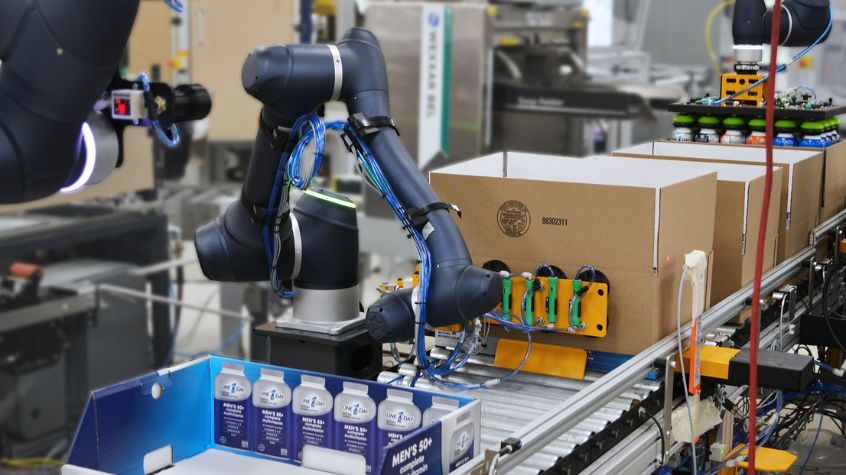
Packaging is a critical part of manufacturing, but manual packaging processes can create bottlenecks, increase labor demands, and limit production capacity. As manufacturers look for ways to improve efficiency, automated packaging systems offer opportunities to streamline operations and maintain consistent output.
However, packaging automation requires careful planning and investment. Understanding the benefits, costs, and operational requirements can help you determine whether automation makes sense for your facility.
Doosan Robotics Americas specializes in robotic systems integration, helping manufacturers evaluate packaging challenges and implement automation solutions tailored to their production goals.
What Are Automated Packaging Systems?
Automated packaging systems use machinery, robotics, and control technology to perform packaging tasks with reduced manual intervention. These systems can handle activities such as forming boxes, packing products into cases, sealing cartons, and stacking finished goods onto pallets.
Depending on your production requirements, packaging automation may involve individual machines or multiple pieces of equipment working together.
Common components include:
- Robotic packaging systems: Robots equipped with specialized tooling to pick, position, and pack products.
- Case erecting equipment: Machinery that forms flat cardboard blanks into ready-to-fill cases.
- Conveyors and material handling equipment: Systems that transport products between packaging stations.
- Palletizing systems: Equipment that arranges finished cases or products onto pallets.
These technologies can be integrated into existing production lines or incorporated into new packaging operations.
Doosan Robotics Americas provides automated packaging solutions designed to address different end-of-line packaging requirements.
What Are the Main Benefits of Automated Packaging Systems?
The primary automated packaging systems benefits include improved productivity, greater packaging consistency, reduced repetitive manual handling, and increased production flexibility.
Increased Productivity and Throughput
Manual packaging operations depend on employees consistently performing repetitive tasks throughout a shift. Production speeds can fluctuate due to fatigue, staffing availability, and variations in handling methods.
Automated equipment can perform programmed packaging operations at consistent rates, helping manufacturers maintain more predictable throughput.
When properly integrated, end-of-line packaging automation can also reduce delays between production and shipping preparation.
Improved Packaging Consistency
Consistent packaging helps protect products, maintain presentation standards, and support efficient distribution.
Automated case packers and palletizing systems follow programmed handling patterns, reducing variation in product placement and package arrangement.
This consistency can help minimize packaging errors and reduce the need for rework.
Better Labor Utilization
Packaging automation does not necessarily eliminate the need for employees. Instead, it can reduce time spent on repetitive activities such as manually loading cartons, erecting boxes, or stacking pallets.
Your employees can potentially focus on equipment monitoring, quality control, maintenance, and other responsibilities.
Automation may also help manufacturers manage persistent staffing challenges in labor-intensive packaging operations.
Greater Scalability
As production demand increases, manual packaging processes may struggle to keep pace.
Automated packaging systems can help manufacturers accommodate higher production volumes, provided the equipment has sufficient capacity and the surrounding processes can support increased throughput.
What Is the Most Common End-of-Line Packaging Systems?
End of line packaging systems prepare finished products for storage, shipment, and distribution. Three common automation solutions are robotic case packers, case erectors, and robotic palletizers.
Robotic Case Packers
Robotic case packing systems automatically place products into cartons or shipping cases.
An automated robotic case packer typically uses a robotic arm with appropriate gripping equipment to pick products and position them inside cases.
These systems can be configured for different product dimensions, packaging arrangements, and production requirements.
Robotic case packing is particularly useful when repetitive manual loading creates bottlenecks or inconsistent packing results.
Robotic Case Erectors
Case erecting equipment prepares cardboard boxes for product loading.
A robotic case erector automates the process of forming flat case blanks into assembled cartons, reducing the need for employees to manually prepare boxes.
Integrating case erecting robots with downstream packing equipment can help maintain a consistent supply of cartons and reduce interruptions.
Robotic Palletizing Systems
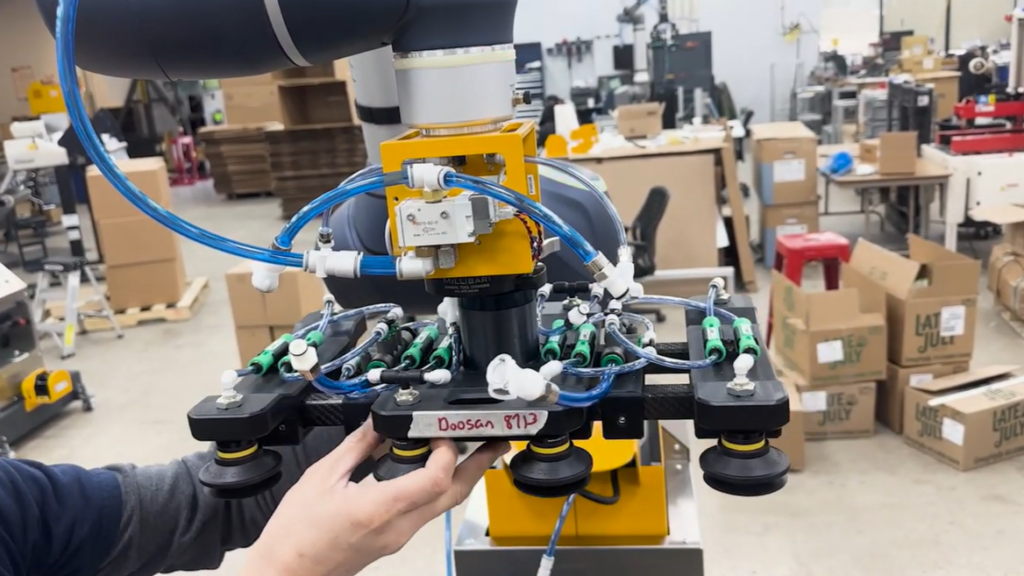
Palletizing is often one of the most physically demanding packaging tasks, requiring employees to repeatedly lift, move, and stack finished products.
Robotic palletizing systems use robotic equipment and appropriate end-of-arm tooling to arrange products or cases onto pallets.
These systems can support consistent stacking patterns while reducing repetitive manual lifting.
Depending on the application, palletizing equipment may also incorporate conveyors, pallet handling components, and safety systems.
How Much Do Automated Packaging Systems Cost?
The cost of packaging automation varies considerably depending on the equipment, application complexity, and integration requirements.
A single automated packaging machine generally involves a different investment than a fully integrated end-of-line system.
Major cost factors include:
- Equipment selection: Robotic arms, case handling equipment, conveyors, grippers, and supporting machinery.
- System integration: Engineering, programming, equipment communication, and installation.
- Production requirements: Product dimensions, handling complexity, packaging formats, and required throughput.
- Safety equipment: Guarding, sensors, and other safeguards appropriate for the application.
- Training and maintenance: Employee instruction, preventive maintenance, replacement parts, and technical support.
Manufacturers should also consider production downtime during installation and commissioning.
The total investment should account for the complete operating system rather than equipment purchase prices alone.
How Do You Calculate ROI for Packaging Automation?
Return on investment (ROI) helps determine whether the financial benefits of packaging automation justify its costs.
A basic ROI calculation is:
ROI (%) = [(Total Financial Benefits − Total Investment Costs) ÷ Total Investment Costs] × 100
For a more accurate evaluation, compare expected benefits and costs over a defined period.
Potential financial benefits include reduced manual labor requirements, increased production capacity, lower packaging waste, and fewer handling-related errors.
For example, if a packaging automation project requires a $200,000 investment and generates $80,000 in annual net operating savings, its simple payback period would be approximately 2.5 years.
Actual results depend on production volume, operating hours, maintenance expenses, and how effectively the system is utilized.
The National Institute of Standards and Technology provides additional resources for manufacturers evaluating robotics and automation.
How Do You Know If Packaging Automation Is Right for Your Business?
Packaging automation is generally worth evaluating when repetitive manual tasks limit productivity, create staffing challenges, or prevent production from meeting demand.
Consider these questions:
- Are manual packaging operations creating frequent production bottlenecks?
- Do you struggle to maintain adequate staffing for repetitive packaging tasks?
- Are packaging inconsistencies causing errors, waste, or rework?
- Is production demand increasing beyond your current packaging capacity?
- Do you have sufficient production volume to justify an automation investment?
If several of these challenges apply to your facility, automated packaging systems may offer meaningful operational benefits.
Automation solutions can be tailored to accommodate a wide range of production volumes, product variations, and evolving packaging requirements. By evaluating system flexibility, scalability, and long-term operational goals, facilities can identify automation opportunities that improve efficiency, reduce costs, and support future growth.
Why Work With an Experienced Robotics Integrator?
Successful packaging automation requires more than purchasing robotic equipment. System components must work together reliably within your production environment.
An experienced robotics integrator can help evaluate your workflows, identify appropriate equipment, develop system layouts, and coordinate installation and commissioning.
Integration expertise helps connect automation technology with practical manufacturing requirements.
Working with Doosan Robotics Americas allows you to evaluate robotic packaging systems based on your production goals, facility constraints, and operational priorities.
Explore Automated Packaging Solutions from Doosan Robotics Americas
Automated packaging systems can help manufacturers improve throughput, maintain consistent packaging quality, reduce repetitive manual handling, and prepare for future production growth. The right investment depends on your existing processes, production requirements, and expected financial returns.
Doosan Robotics Americas helps manufacturers evaluate these factors and develop robotic packaging solutions suited to their operations.
Explore Doosan Robotics Americas’ packaging automation solutions to learn how robotic case packing, case erecting, and palletizing systems can support a more efficient end-of-line packaging process.